
Uboat: Sea War
Anisoft Yazilim Derya Bagdinli ve Ort. Koll. Sti.Action
4.4391.00 Reviews
- Version
- 0.7.3
- Installs
- 500.00K
- Age Rating
- Teen
Screenshots
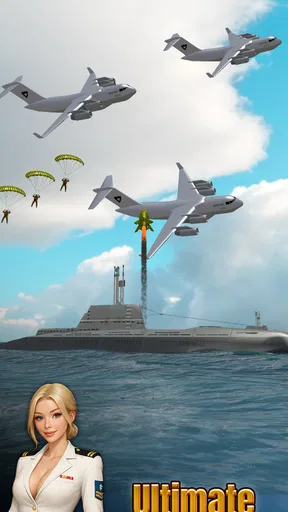
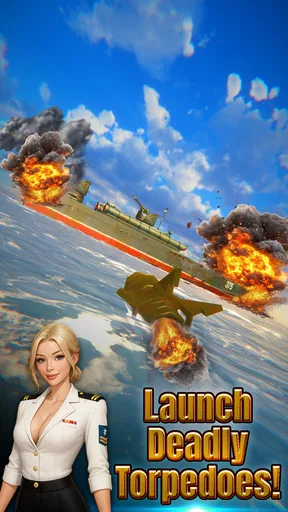
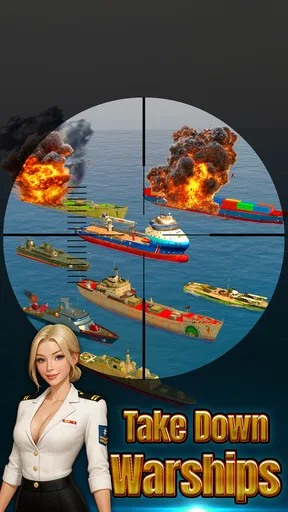

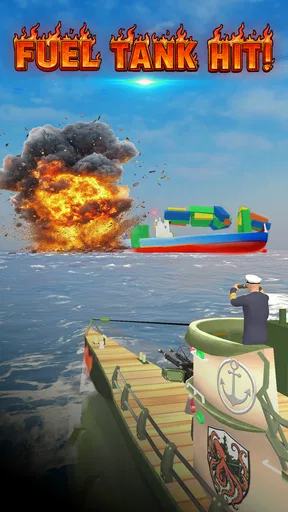
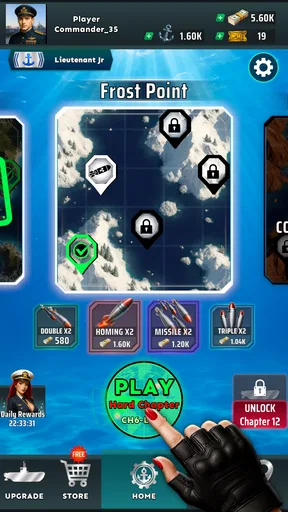
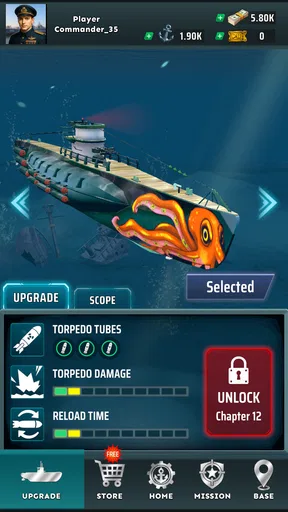

Our Review of Uboat: Sea War
 Analysis by Appyee
I went into Uboat: Sea War expecting a straightforward mobile action game built around submarines, and my first impression was that it understands the appeal of the setting immediately. The idea is simple to grasp: take control of a u-boat, search the sea, choose your moment, and survive the pressure that comes with attacking from below the surface. It feels more focused than a broad military game because the submarine theme is not just decoration; it shapes the pace and the way I make decisions.
This is a free action game from Anisoft Yazilim Derya Bagdinli ve Ort. Koll. Sti., with a Teen content rating. It is available for devices running Android 7.0 or later, and the current version is 0.7.3. The game has reached over 100 thousand installs and holds a 4.4 average from around 27 thousand ratings, which gives it a useful level of community interest without making it feel like an overcrowded mainstream release.
Why the first week is the strongest part
The opening sessions work because the submarine fantasy creates natural tension. A surface ship can be obvious and immediate, while a u-boat depends on patience, positioning, and knowing when not to act. Even when a session is short, I found myself thinking about the next move rather than simply tapping through targets. That small delay between spotting an opportunity and committing to it gives the action more character than a typical mobile shooter.
The first week is also when the setting feels freshest. I enjoyed learning how cautious I needed to be, how much time I wanted to spend observing, and how quickly a promising attack could become a problem. The game does not need a complicated explanation to make the basic loop understandable: patrol, identify a target, attack, and deal with the consequences. That clarity is one of its biggest strengths for anyone who wants an action game that can be picked up without studying a long manual.
My best early sessions came when I resisted the urge to attack immediately. The submarine theme rewards a slower mindset, even though the game belongs to the action category. I started treating each encounter as a small risk calculation: is the target worth exposing myself for, and will a successful hit leave me in a worse position? That is a more interesting question than simply asking which button causes the most damage.
The important early lesson is that patience is part of the weapon. Players who rush every encounter may still enjoy the explosions and movement, but they will miss much of what makes this particular game different from a conventional arcade shooter. I recommend spending the first few sessions learning the rhythm rather than trying to optimize progress immediately.
A good fit for short, focused sessions
I can see myself opening Uboat: Sea War during a break, on a commute, or late in the evening when I want something more active than a puzzle but less demanding than a large console-style game. Its central idea is easy to remember, so I do not need to rebuild a complicated mental checklist every time I return. That matters on mobile, where a game often competes with interruptions and limited attention.
For example, if I have ten minutes before leaving home, I can play with a clear goal: complete a patrol, test a different approach, or simply practice reading an encounter. If I have more time, I can settle into the atmosphere and make more deliberate choices. That flexibility gives the game a practical advantage over mobile action titles that only feel satisfying when I can commit to a long session.
There is also a useful distinction between enjoying the submarine theme and enjoying submarine decision-making. If you mainly want constant firing, rapid movement, and immediate rewards, this may feel slower than expected. If you like the idea of being vulnerable, hidden, and forced to choose the right moment, the first week is likely to be rewarding.
What keeps it interesting after the novelty
The harder question is not whether the game can entertain me during the first few days. It can. The real test is whether the central loop has enough variation to remain meaningful after the submarine novelty fades. My answer is cautiously positive, but with an important condition: the game works best when I give myself a reason to play beyond simply repeating the same attack pattern.
That reason can come from improving my judgment. I began to notice that a failed encounter was not always a sign that the game was unfair. Sometimes I had attacked too early, stayed committed for too long, or treated every visible target as equally valuable. Looking back at those decisions gave the sessions a small learning curve. The satisfaction came less from collecting a victory and more from recognizing why a later attempt went better.
This is where the game has more lasting potential than its short description suggests. A basic action game can become disposable once the controls are familiar, but a game built around timing and risk can stay useful if each session helps refine a habit. I found that the most rewarding improvement was not playing faster; it was becoming more selective.
Still, I would not describe the long-term value as unlimited. The core appeal remains concentrated around submarine combat. Players who need a large variety of modes, a deep narrative, or a constantly changing set of objectives may eventually want something broader. A naval strategy game may offer more planning and campaign depth, while a traditional action shooter may provide more immediate variety. Uboat: Sea War sits between those experiences, using the submarine premise to create tension without trying to become a full-scale naval simulator.
How I would build a repeatable habit
My advice is to avoid turning every session into a progress check. Instead, I would use small personal objectives. One session could focus on patience, another on choosing safer engagements, and another on testing how much pressure I can handle before retreating. This approach makes the game feel less repetitive because I am evaluating my decisions rather than only watching the reward screen.
A second useful habit is to stop after a frustrating run instead of immediately chasing a better result. The submarine setting can make mistakes feel personal because the failure often follows a decision I made a few moments earlier. Playing while annoyed encourages reckless attacks, which creates a cycle of more failures. Taking a short break protects the game from becoming a source of needless irritation.
There is also a practical reason to keep expectations realistic. The game is free, but optional purchases range from $0.49 to $44.99 per item. I would approach those purchases carefully and decide first whether the basic loop itself is enjoyable. Spending money will not solve the central question of whether I like the pace, the tension, and the repeated decision-making. For me, the sensible order is to play enough free sessions to understand the routine before considering any purchase.
Where the maintenance burden appears
By maintenance, I mean the effort required from me to keep the game enjoyable over time. Uboat: Sea War has a relatively low entry burden because the theme and objective are easy to understand. I do not need to remember a complex story or maintain a large roster in my head. That makes returning simpler than in many live-service-style games that expect constant attention.
However, low entry friction does not automatically mean low long-term maintenance. The player still has to supply variety through the way encounters are approached. If I always use the same timing, pursue every target, and judge success only by immediate rewards, the experience can flatten. The game’s recurring value depends partly on whether I am willing to keep learning its situations instead of treating each session as an identical routine.
Version 0.7.3 is a reminder that the experience is still one I would approach with some flexibility. I would keep the game updated and expect the feel of a developing mobile title to matter over time. That is not a criticism of the developer, Anisoft Yazilim Derya Bagdinli ve Ort. Koll. Sti.; it is simply relevant for anyone deciding whether to make a game part of a regular rotation. A game can be enjoyable today while still needing continued refinement to become a dependable long-term favorite.
For everyday use, I would not make it my only action game. I would keep it alongside a faster title for moments when I want immediate excitement and perhaps a strategy game for longer planning sessions. That combination reduces pressure on Uboat: Sea War to provide every kind of entertainment. In its best role, it is the focused submarine option I choose when I want tension and deliberate attacks.
What can cause fatigue
The first source of fatigue is repetition in the central decision cycle. The submarine concept gives each encounter a distinctive mood, but mood alone cannot replace meaningful variation forever. Once I understand the basic rhythm, I need enough difference in situations or enough personal improvement to keep caring about the next attempt. When neither is present, the game risks becoming a familiar sequence rather than a fresh challenge.
The second source is the gap between action expectations and submarine pacing. The store summary calls it the ultimate u-boat war game, but I would not approach it expecting the nonstop intensity of a conventional action shooter. There are moments of urgency, yet the appeal depends on waiting and choosing. Players who downloaded it for continuous combat may interpret that slower rhythm as a lack of excitement, while players who wanted stealth-like tension may find it more appealing.
The third issue is monetization pressure as a general consideration. Because the game is free and includes purchases across a wide price range, I would pay attention to how comfortable I feel progressing without spending. Even when optional purchases are reasonable, the presence of higher-priced items can change how I evaluate the pace of a free game. My recommendation is to decide on a personal spending limit before buying anything, especially if the game becomes part of a daily habit.
The Teen rating also helps set the right audience expectation. I would not choose this as a family game for young children, and I would explain the combat setting before handing it to a younger player. For teenagers and adults who enjoy military action with a slower tactical edge, the rating feels consistent with the overall premise.
Who should play it and who should skip it
I would recommend this game to someone who likes naval combat but does not necessarily want a complicated simulation. It is also a good choice for players who enjoy the emotional contrast between calm observation and sudden danger. If you like games where a bad decision can be traced back to a moment of impatience, the submarine setting gives that idea a clear identity.
I would be more cautious recommending it to someone who wants a story-driven campaign, a huge collection of vehicles, or constant content changes. Those players may be happier with a larger strategy or military game. I would also skip it if my main goal were quick reflex action with no waiting, because the deliberate pace is not a minor detail; it is the foundation of the experience.
It is worth remembering that the game has a growing but still modest footprint compared with the biggest mobile releases. Its rating of 4.4 from around 27 thousand ratings suggests that many players find the concept effective, while the total of over 100 thousand installs places it in a more focused niche. I see that as a benefit if I want something less familiar, but it also means I would not expect the same breadth or polish associated with the largest action franchises.
My long-term verdict
After the initial excitement settles, Uboat: Sea War earns space on my device as a specialist game rather than an all-purpose action favorite. I return to it when I want submarine tension, careful timing, and the satisfaction of making a risky decision work. The first week provides the strongest novelty, but the game can continue to hold attention when I treat it as a practice in judgment instead of a simple target-clearing exercise.
Its limitations are just as clear. The core loop may become repetitive for players who need constant novelty, and the slower pace will not suit anyone expecting uninterrupted action. The free-to-play structure also deserves a measured approach, particularly because individual purchases can reach $44.99. I would play first, decide whether the basic experience has lasting value, and only then consider spending.
For me, the deciding factor is whether I still enjoy the moment before the attack. If I do, the game has a reason to stay installed. If I only enjoy the reward afterward, the novelty has probably worn off. That makes the title easy to judge honestly: it is not trying to replace every naval or action game, but it offers a distinct submarine-focused rhythm that can become a reliable part of a mobile gaming routine.
My recommendation is to try it if you want a free action game with a cautious naval identity rather than nonstop shooting. Give it several sessions, experiment with patience, and resist judging it by the standards of a fast arcade shooter. If that deliberate pressure feels satisfying, this compact u-boat experience can remain worthwhile well beyond its first impression.
Verdict
Strengths of Uboat: Sea War
- Strategic submarine gameplay rewards careful planning and patience.
- Atmospheric underwater setting creates a tense naval combat experience.
- Mission variety helps keep gameplay from feeling repetitive.
- Controls are generally easy to learn on mobile devices.
- Progression gives players reasons to upgrade and improve their fleet.
Limitations of Uboat: Sea War
- Some missions may feel slow for players who prefer fast-paced action.
- Difficulty can increase sharply, especially during later encounters.
- Limited viewing range makes enemy detection frustrating at times.
- Upgrades and progression may require considerable time investment.
- The game may become repetitive after extended play sessions.
Similar Picks in This Category
View All
Temple Run 2: Endless Escape
Imangi Studios4.1

PUBG MOBILE
Level Infinite4.3

Free Fire: 9th Anniversary
GARENA INTERNATIONAL I4.4

Talking Tom: Hero Dash Run
Outfit7 Limited4.3

slither.io
Lowtech Studios3.9

Sniper 3D:Gun Shooting Games
Wildlife Studios4.6
Frequently Asked Questions
What is Uboat: Sea War about?
Uboat: Sea War is a naval strategy game focused on submarine warfare during a historical-style sea conflict. You command a submarine, plan routes, search for enemy vessels, launch torpedoes, and try to survive counterattacks. Success depends on patience, positioning, resource management, and choosing the right moment to strike rather than simply attacking every target you find.
Is Uboat: Sea War free to download and play?
Uboat: Sea War can generally be downloaded without an upfront purchase, but the exact monetization system may depend on the version and platform. Players should check the store listing before installing because the game may include advertisements, optional in-app purchases, or progression-related offers. These extras are not necessarily required, but they can affect how quickly some content or resources are unlocked.
Does Uboat: Sea War require an internet connection?
An internet connection may be needed for the initial download, updates, advertising, cloud features, or certain online services. Some gameplay elements may work offline, but availability can vary according to the device and current version. If you plan to play while traveling or without mobile data, it is best to test the game in offline mode after installation instead of assuming every feature will remain accessible.
Is Uboat: Sea War suitable for beginners?
The game can be approachable for newcomers, especially if they enjoy strategy titles and naval combat, but it may take time to understand submarine movement, detection, aiming, and defensive tactics. Early missions or tutorials are useful for learning the controls. New players should expect some trial and error, because careless movement or poorly timed attacks can quickly expose the submarine to enemy fire.
What devices are compatible with Uboat: Sea War?
Compatibility depends on the specific Android or iOS release, operating-system version, and device hardware. Before downloading, review the official store requirements and make sure your phone or tablet has enough free storage for the installation and future updates. Devices with a reasonably modern processor and sufficient memory should provide a smoother experience, while older models may encounter slower loading or reduced performance.
Play our best games!


